
No products in the cart.
Advanced Telescope Optics and Mobility System (ATOMS)
Our Advanced Telescope Optics and Mobility System (ATOMS) is designed for rapid, low-cost deployment without sacrificing quality. Our vertically integrated manufacturing ensures the highest quality optics, and our integrated technology stack provides unmatched Space Domain Awareness capabilities.
*Price excludes shipping and crating. See our crating and pricing policy for full details.
Call for pricing.
About the Advanced Telescope Optics and Mobility System (ATOMS)
The Telescope
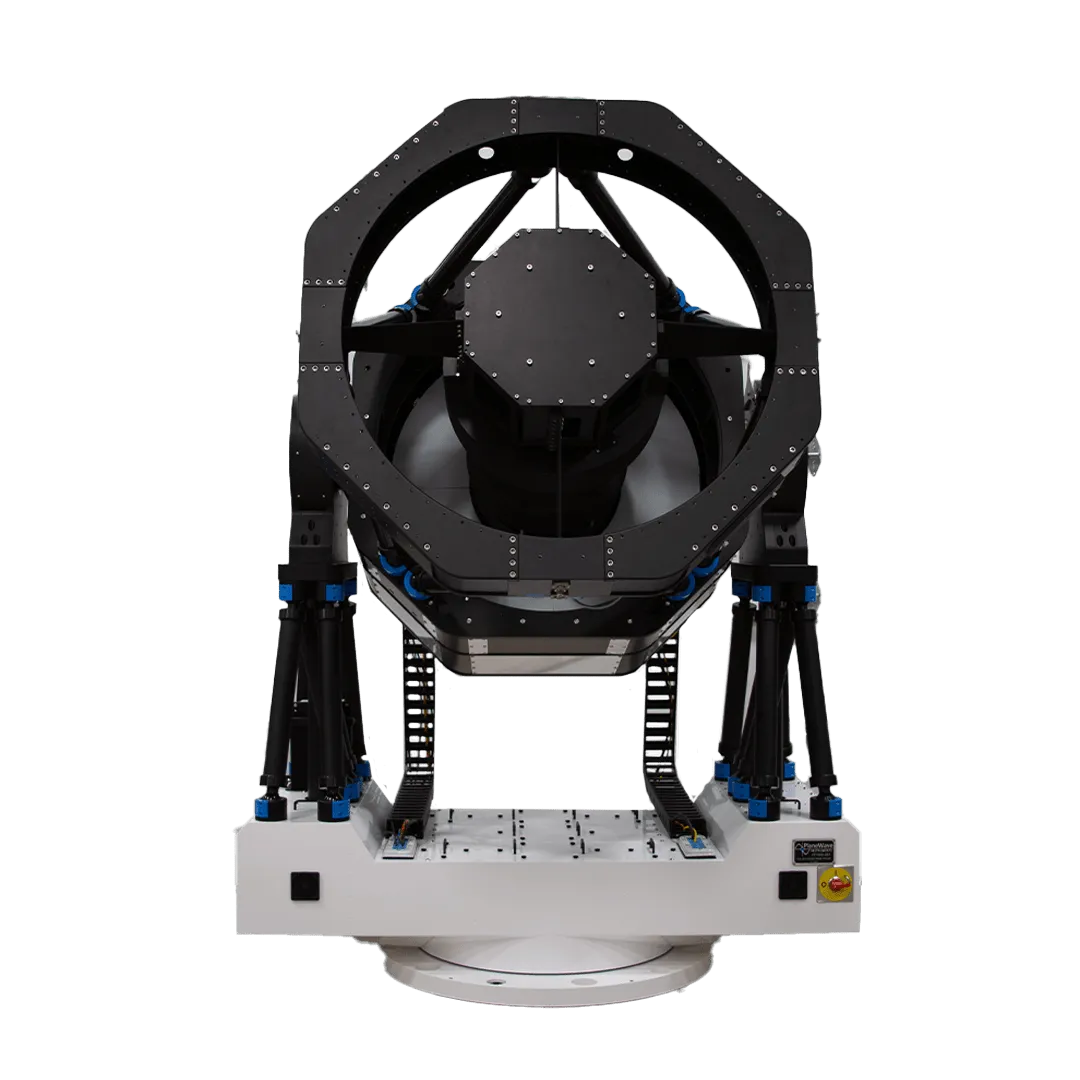
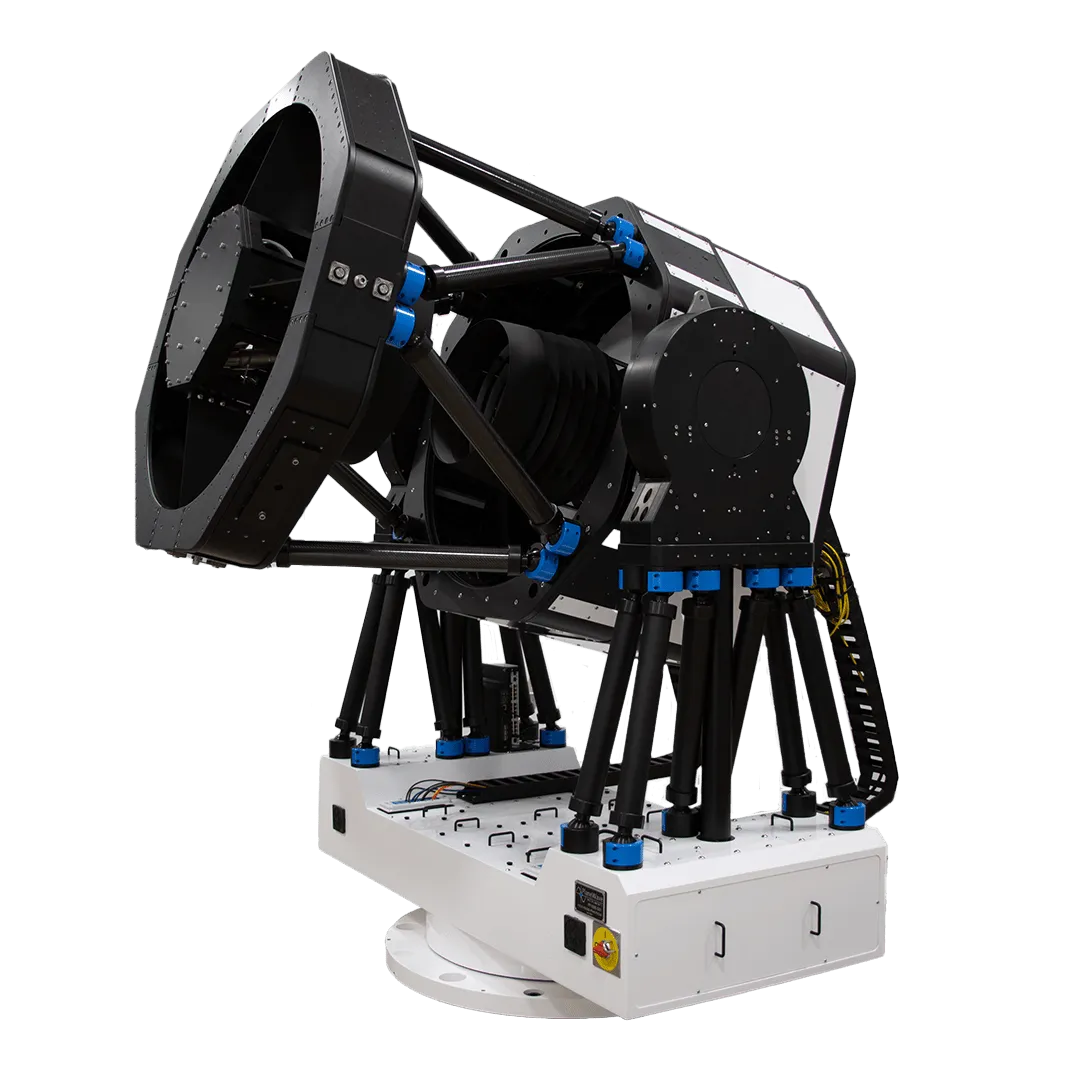
The system is built around the PF1000 optical tube assembly, a high-aperture, high-stability instrument engineered for long-duration, high-precision tracking. Its optical train and structural design allow for low-noise imaging, high pointing accuracy, and operational resiliency in remote deployments.
The Enclosure
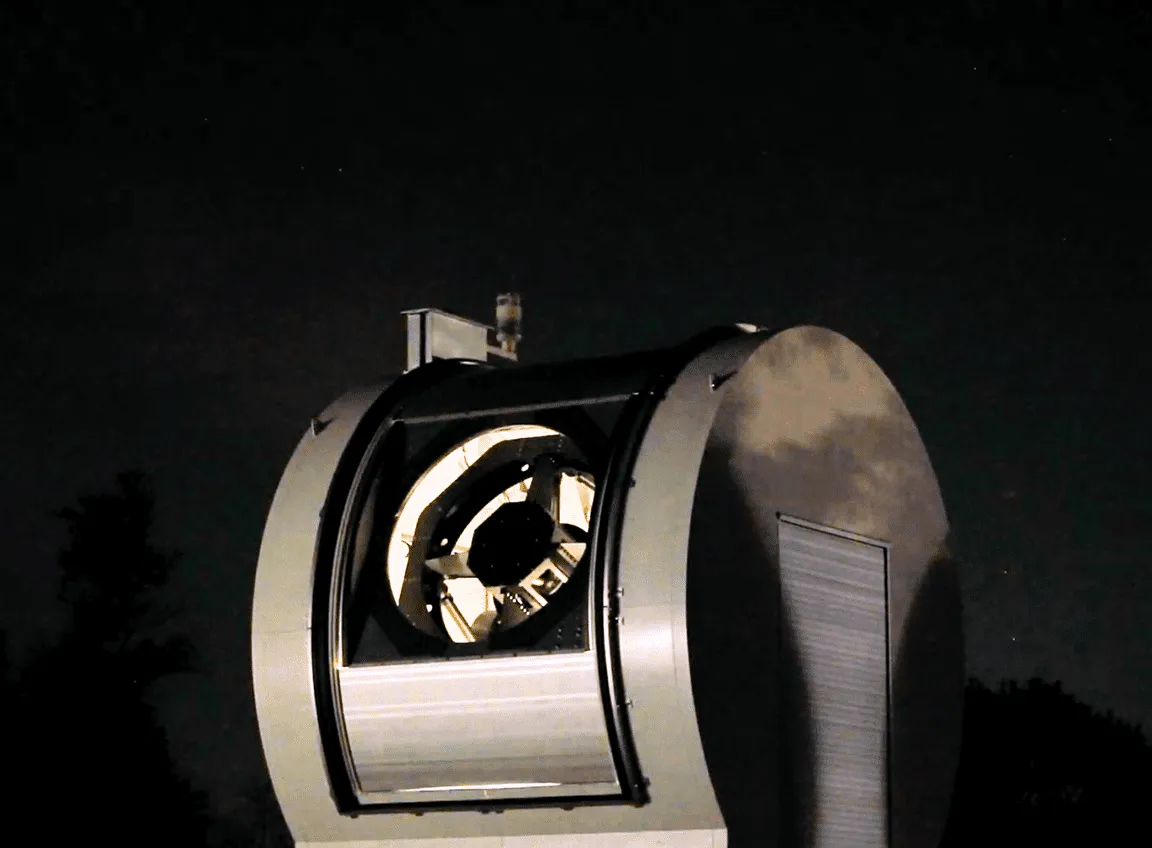
A purpose-engineered protective housing designed specifically around the PF1000 form factor. Key technical features include:
- A bespoke slit aperture to support the robotic window-frame geometry.
- Optimized internal clearances for unobstructed azimuth/elevation motion.
- Reinforced structural members for improved wind-load resistance and thermal stability.
This enclosure ensures the telescope maintains environmental isolation while preserving full sky accessibility.
The Telescope Mobility System (TMS)
The TMS is the mechanical heart of the ATOMS platform. It serves two mission-critical functions:
- Transit Vibration Isolation: During transport, the TMS functions as a secondary suspension system, attenuating vibrational loads transmitted through the trailer chassis. This minimizes mechanical stress on the optical assembly and preserves calibration integrity.
- Operational Decoupling: Once on-site, the TMS mechanically decouples from the trailer and enclosure. This isolates the telescope from micro-vibrations, thermal expansion of the trailer, and structural resonances, ensuring the optical system operates at full sensitivity and maintains high-precision tracking.
Trailer Platform
An industry-first commercial gooseneck trailer designed to:
- Integrate with the TMS hardpoints
- Support dynamic load management during transport
- Provide a stable, level platform during deployment
This approach minimizes cost while enabling global, repeatable field operations.